
What Is Sensory Design? A Guide for Luxury Homeowners and Businesses

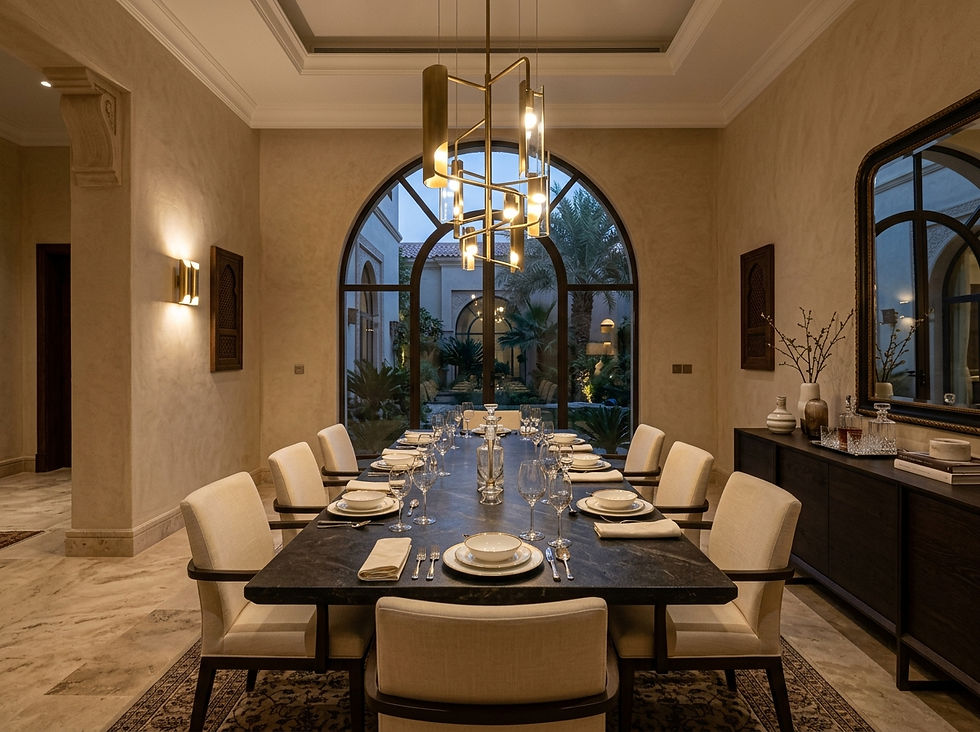
There is a particular kind of space that does something beyond looking impressive. You walk in and feel immediately at ease — or energized, or inspired. The temperature seems right. The surfaces invite touch. Sound behaves exactly as it should. There is a scent you cannot quite identify but do not want to leave behind.
This is not coincidence. It is not instinct on the part of the designer. It is the result of a deliberate, structured methodology called sensory design — and it is redefining what it means to create a truly elevated environment.
For luxury homeowners in Riyadh and businesses seeking spaces that communicate their brand with precision, understanding sensory design is no longer optional. It is the difference between a space that is beautiful and a space that is unforgettable.
The Definition: What Sensory Design Actually Means
Sensory design is the intentional orchestration of all five senses — sight, touch, sound, scent, and spatial perception — to produce a specific emotional or behavioral response within a built environment.
Most interior design addresses one sense almost exclusively: sight. Materials are selected for their visual appeal. Layouts are evaluated in renderings. Mood boards are assembled from photographs.
Sensory design begins where visual design ends. It asks: what will this surface feel like under the hand? What will the acoustic character of this room do to conversation? What olfactory memory will this entrance trigger? How does the temperature gradient between outdoor and indoor affect the moment of arrival?
These are not decorative questions. They are psychological ones — and answering them correctly is what separates a luxury environment from a merely expensive one.
Why the Five Senses Matter in Luxury Interiors
Sight: The Starting Point, Not the Finish Line
Visual design remains the foundation. Proportion, light, material selection, and spatial flow all register through sight first. A well-composed room communicates quality before anyone touches a surface or hears a sound.
But vision is also the sense most easily overwhelmed. A room that relies entirely on visual impact tends to feel exhausting over time — heavy, performative, designed to be photographed rather than inhabited.
Sensory design uses visual composition to set the frame, then allows the other senses to deliver the depth.
Touch: The Sense That Communicates Material Truth
Haptic experience — what a surface feels like — is one of the most powerful communicators of quality in a luxury environment. Smooth versus textured. Warm versus cool. Resistant versus soft.
When a client runs their hand across a reception desk and it responds with weight and warmth, their brain registers credibility. When a residential client sinks into a sofa whose fabric has been selected for tactile density as much as color, their body signals comfort before their mind processes the thought.
Touch is the sense that validates what sight promises. If the two are misaligned — a space that looks expensive but feels hollow — trust breaks down immediately.
Sound: The Most Underestimated Design Variable
Most spaces are not acoustically designed at all. They are built, furnished, and the acoustic result is whatever remains.
In sensory design, sound is treated as a material. Ceiling height, surface density, soft furnishing placement, and material layering are all evaluated for their acoustic effect. The goal is not silence — silence creates unease in hospitality and commercial contexts. The goal is acoustic intentionality: the right degree of warmth and absorption for the specific emotional register the space is meant to produce.
A luxury restaurant, a corporate boardroom, and a private residence each require a completely different acoustic environment. Designing them to sound the same is a failure of sensory intelligence.
Scent: The Sense with the Longest Memory
Of all five senses, olfactory experience has the most direct connection to memory and emotion. Scent bypasses the analytical brain and creates association almost instantly — which is precisely why luxury hotels invest significantly in signature scent programs.
In residential sensory design, scent is introduced through materials — natural woods, specific upholstery treatments, fresh botanical elements — rather than through artificial fragrance systems. The result is a layered, authentic olfactory signature that belongs to the space rather than masking it.
For commercial clients, a branded scent — calibrated to the emotional register of the brand — can extend brand recognition beyond the visual and into physiological memory. Clients remember how your space smelled. That memory is durable in a way that photography rarely is.
Spatial Perception: The Sense That Governs Everything Else
The fifth sense in sensory design is proprioception — the body's awareness of itself in space. How tall does this room feel? How does scale shift as you move from entrance to interior? Where is the light coming from, and what does it make the body want to do?
Spatial perception is controlled through ceiling height variation, the orchestration of compression and release as occupants move through a floor plan, threshold design, and the deliberate placement of light sources at human rather than architectural scale.
When spatial perception is designed correctly, occupants feel neither overwhelmed nor lost. The space feels proportioned to them — which is the precise sensation that luxury environments must deliver.
Sensory Design in Practice: Residential vs. Commercial Applications
For Luxury Homeowners
In a private residence, sensory design serves a personal agenda: the creation of an environment that genuinely supports how the client wants to feel in their home.
This begins with a calibration of the client's sensory preferences — which textures they gravitate toward, what acoustic environment supports their daily rhythm, whether they find warmth or coolness energizing, what olfactory notes they associate with wellbeing.
These inputs become design constraints as precise as square footage or structural limitations. The result is a home that does not simply reflect the client's taste visually, but resonates with it physically — a space that feels distinctly theirs in a way that generic luxury cannot replicate.
At Ironwood Solutions, this is what we mean when we describe our residential projects as singular environments. The sensory layer is what makes a space irreplaceable.
For Businesses and Commercial Clients
In a commercial context, sensory design performs a strategic function: it makes the brand inhabitable.
Most businesses have a brand identity that exists on paper — a set of guidelines describing colors, fonts, and tone of voice. Sensory design takes that identity and translates it into physical experience. Clients who walk into a space designed with sensory intelligence do not need to read your brand story. They feel it.
This is particularly significant for hospitality, retail, and professional services environments — any context where the client's physical experience of your space directly influences their perception of your capability and their willingness to trust you.
An integrated approach — where brand guidelines inform sensory strategy, which then drives interior design — produces an environment with a coherence that no amount of post-production decoration can achieve. This is the methodology Ironwood builds into every commercial project from the first briefing session.
The Ironwood Approach to Sensory Design
Most interior design firms operate by selecting from what exists: materials available in current collections, finishes within the specified budget, furniture from preferred suppliers.
Ironwood Solutions works from a different starting point. Every project begins with a sensory brief — a structured definition of the emotional and behavioral outcomes the space must produce. That brief governs every decision that follows: not just what is selected, but why, and how each element contributes to the total sensory composition.
This is what we mean by bespoke. Not custom furniture. Not exclusive finishes. A space where every sensory variable has been considered, calibrated, and resolved — producing an environment that cannot be replicated, because it was built specifically for one client, one brief, one set of outcomes.
It is design elevated to strategy.
How to Know if Your Current Space Is Missing the Sensory Layer
There are several indicators that a space — however visually accomplished — has not been designed with sensory intelligence:
Visitors comment on how the space looks but not on how it feels
Acoustic discomfort causes occupants to raise their voices or feel fatigued after extended time in the space
The space photographs well but feels different — flatter, less resolved — in person
No deliberate scent program exists, and the space has a generic or neutral olfactory character
Clients or guests leave sooner than desired, without a clear behavioral reason
If any of these describe your current environment — residential or commercial — the sensory layer is likely absent or underdesigned. That is a correctable problem, and it does not always require a full redesign.
Beginning the Conversation
Sensory design is not a luxury add-on. For clients who require environments that perform — that convert, that retain, that leave a lasting impression — it is the foundation of the design process.
If you are planning a new project or evaluating an existing space in Riyadh or across the region, Ironwood Solutions offers an initial consultation structured around your specific sensory and strategic objectives.
The starting point is a conversation. The outcome is a space that cannot be replicated.
Related reading: Why Your Brand Identity Should Drive Your Interior Design Decisions | The Psychology of Texture in Luxury Interiors (coming soon)

Comments